A guest article by Tom Brimeyer, Functional Medicine Practitioner and Author of Hypothyroidism Healing Program and Hypothyroidism Exercise Program
There’s a big problem within the medical community today with their approach to treating a number of health problems and diseases. In fact, 9 out of 10 times, this problem exists because their treatments are driven entirely by financial interests and NOT the best interests of the patients who are suffering. Their current sub par approach to hypothyroidism treatment is one that understandably fits the bill.
In just a minute, I’m going to give you some important tips that your doctor isn’t telling you about. However, all of them are necessary for any successful hypothyroidism treatment.
But before I do, I want to talk a little bit about why none of this is even discussed within the medical community.
Hypothyroidism Treatment – Then and Now
Here’s something that most people don’t realize.
Long ago, the doctors at the time were far more successful at treating hypothyroidism than they are today. This was before the pharmaceutical industry was pulling in over $500 billion dollars (yes, I said billion) each year from drug sales.
Many years ago, doctors clearly understood the far reaching effects of hypothyroidism. It was extremely common for doctors to find that hypothyroidism was involved in the majority of their patients’ health problems. Oftentimes, the right hypothyroidism treatment would not only eliminate all of their symptoms, but also leave them with a clean bill of health.
Today, doctors have become far less accustomed to determining the underlying cause of disease. Instead, they have become far too accustomed to treating only their patients’ symptoms. By using drugs to merely cover up your hypothyroidism symptoms, you do absolutely nothing to improve your state of health. It’s very common that you develop newer and more severe symptoms in the process.
Unfortunately, when there’s more than $500 billion dollars at stake each year, there’s no real incentive to heal people. There’s far too much money to be made if people continue to stay sick and develop new and more serious health problems that require the use of even more drugs.
If we went back to our old ways of using far more effective hypothyroid treatment options, then there would be too few people left to spend all of their hard earned money on a lifetime of prescription drugs.

The Truth About Hypothyroidism Treatment
The truth is that there is so much more that you can do to treat hypothyroidism than what your doctor may or may not recommend.
As I mentioned above, because the medical community is largely driven by the financial interests of the pharmaceutical industry, most patients are sent home with the wrong medication. Oftentimes it only makes their hypothyroidism worse in the end (more about that below).
A quick search on just about any online medical reference will quickly tell you that there are certain foods and supplements that may affect your ability to absorb many of the thyroid medications that are readily prescribed.
The problem is that not a single one mentions any foods or supplements that can directly affect your ability to produce or utilize the thyroid hormone that your body naturally makes. In fact, most medical professionals will tell you that your diet has little to no impact whatsoever on the health of your thyroid.
However, when start to look at the research, it tells a very different story.
5 Step Hypothyroidism Treatment That Works
You can throw all of the supplements, medication, etc. at your thyroid that you want. But if you don’t get the basics right, then you’re essentially wasting your time. This is because you are missing the bigger picture.
Below I’m going to cover 5 essential steps that are an integral part of any hypothyroidism treatment if you want to truly restore your life, health, and energy.
1. Start a Hypothyroidism Treatment Diet
There has been a lot of research that demonstrates the important connection between your diet and hypothyroidism. Certain foods directly contribute to hypothyroidism and should be avoided as part of your treatment for hypothyroidism. There are some nutrients that are necessary for your thyroid to function properly.
It should only make sense that your diet should play a big role in your hypothyroidism treatment.
One of the best examples of a problem food are the polyunsaturated fats. Research clearly shows that these fats block:
- Your thyroid from releasing its thyroid hormones
- Your thyroid hormone from being transported properly within your bloodstream
- Your cells from properly using your thyroid hormone.
There are key nutrients that your body needs to effectively produce the necessary thyroid hormones that it needs to keep your cells happy and healthy.
This brings us to the second step.
2. Restore Your Liver Health

Most of the active thyroid hormone T3, that your body uses is produced by your liver. Your liver can’t do this unless it has plenty of stored glycogen and certain nutrients, such as selenium.
If your blood sugar is out of balance and your hypothyroidism diet lacks certain key nutrients then your liver can’t do its job. Even though your thyroid gland itself may not be the problem, your liver can be responsible for slowing it down, resulting in hypothyroidism.
The health of your liver is another major consideration when it comes to your hypothyroidism treatment.
3. Improve Your Stress Management
Most people take their lifestyle for granted. However, your lifestyle can be a determining factor in whether or not your hypothyroidism treatment is successful or whether you continue to become even more hypothyroid.
No matter how you look at it, it always boils down to stress.
Unfortunately, many people don’t realize what stress actually does to the health of your thyroid. For starters, it starts an entire cascade of hormonal reactions within your body, many of which are inflammatory and cause even more stress.
Your stress hormones also play an active role in suppressing your thyroid. It does this by both:
- Inhibiting your liver from converting T4 to active T3, as mentioned above and
- By increasing the conversion to the hormone, Reverse T3, which effectively blocks your thyroid function.
The more stressful our lives become, the more important it becomes to keep stress to a minimum as part of your hypothyroidism treatment.
4. Balance Your Blood Sugar
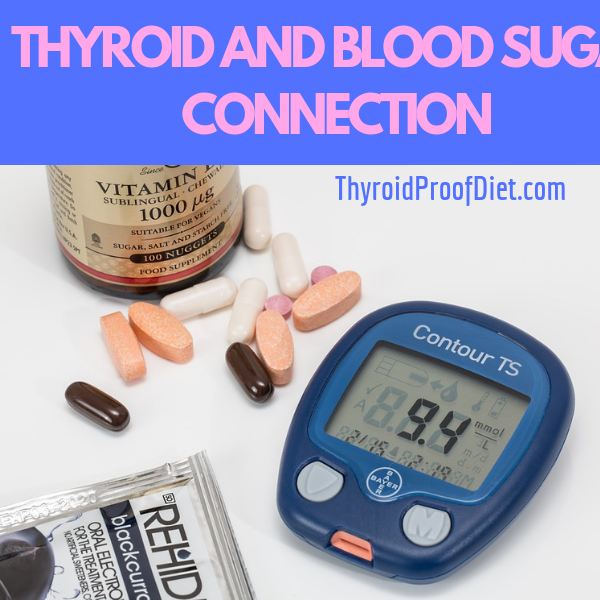
Speaking of stress and stress hormones, one of the fastest and most common ways to increase your stress hormones is to allow your blood sugar to drop too low.
When this happens, your body increases your stress hormone, cortisol, which is responsible for breaking down your muscle tissue in order to raise your blood sugar back up.
But as I’ve already mentioned above, cortisol works against your thyroid.
Balancing your blood sugar should be an extremely important part of any hypothyroidism treatment.
5. Use the Right Thyroid Medication
Once you get your diet right, liver healthy, stress hormones under control, and blood sugar balanced, then your thyroid will begin to function far more effectively. But for some, it still might not be quite enough to get their thyroid health completely back to normal.
Only then is when thyroid medication and supplementation can come in handy as part of your hypothyroidism treatment.
Your entire hormonal system is very complex and oftentimes hormonal feedback pathways can really inhibit your thyroid hormones from returning to normal levels. In these situations, supplementing with the right thyroid hormones can help restore proper hormonal levels rather quickly.
For example, iodine is oftentimes the wrong choice of supplementation which can actually cause more harm than good.
The medical community continues to prescribe T4 only thyroid medication when research clearly shows that it is not effective for the majority of people. Way too often, this additional T4 will actually make you even more hypothyroid which is very counterproductive when it comes to hypothyroidism treatment.
The key is to find the right combination of hormones that your body needs to restore balance.
Hypothyroidism Treatment Results
It’s also important to consider that there are also factors that affect how fast or slow that you begin to see the results of implementing the steps mentioned above in your hypothyroidism treatment plan.
For example, it can vary largely due to a woman’s cycle. This is because of the role that estrogen and progesterone play in her ability to handle certain nutrients in her diet. It’s not uncommon for her symptoms to return when estrogen peaks during her cycle. However, it normally only takes a cycle or two before things begin to stabilize.
If you can get a handle on these 5 essential steps for hypothyroidism treatment success then you will be well on your way to not only seeing improvements with your hypothyroidism but also with fully restoring your health and energy.
You can get all the details here